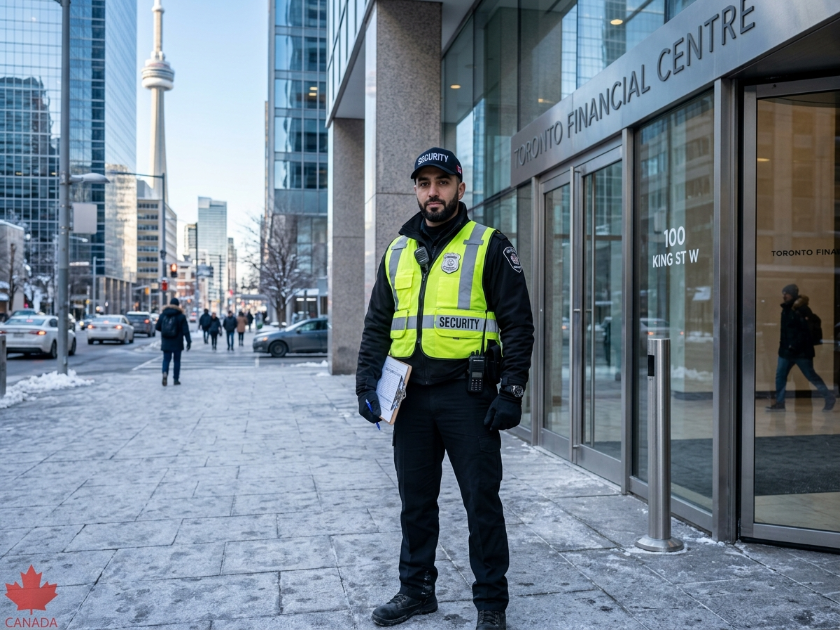
Canada Is Actively Hiring Security Guards — Including Foreign Workers
Canada’s security industry is one of the fastest-growing employment sectors in 2026, with demand outpacing local labor supply across every major province.
From Toronto’s financial district to Calgary’s oil infrastructure, from Vancouver’s luxury high-rises to Nova Scotia’s tourist resorts — trained security guards are urgently needed, and employers are actively sponsoring foreign workers through LMIA-backed work permits.
Key Fact: Security guard positions fall under NOC 64410 / 54100 — codes that qualify for multiple immigration streams including Express Entry and Provincial Nominee Programs (PNP).
Whether you’re looking for a first job in Canada, a stable visa pathway, or a route to permanent residency — this 2026 guide covers everything you need to know.
Why Canada Needs Security Guards in 2026
Canada faces a structural labor shortage in security services due to:
- 📈 Rapid urban population growth across all major cities
- 🏗️ Massive infrastructure and construction project expansions
- 🏥 Growing hospital, healthcare, and care facility networks
- 🛍️ Increased corporate, retail, and commercial security demands
- ✈️ Rebounding tourism, airports, and large-scale events
- 🌙 Persistent domestic worker shortages for night-shift roles
- 🔒 Tightening public safety regulations at provincial and federal levels
The result: Canadian employers consistently cannot fill security positions locally — making LMIA approval for foreign workers easier in this sector than almost any other.
Types of Security Guard Jobs Available in Canada
| Job Type | Industry | Key Duties |
|---|---|---|
| Retail Security Guard | Malls, supermarkets | Loss prevention, monitoring, incident handling |
| Commercial/Office Security | Corporate buildings | Access control, CCTV, visitor management |
| Construction Site Guard | Infrastructure projects | Patrolling, trespassing prevention |
| Mobile Patrol Guard | Multi-site contracts | Night patrols, vehicle driving between locations |
| Hospital Security Guard | Healthcare | Emergency response, staff support, patient safety |
| Event Security Guard | Sports, concerts, conferences | Crowd control, ticket checks, evacuation planning |
| Airport Security | Aviation sector | Screening, surveillance, terminal safety |
Note: Airport security and government contract roles typically require permanent residency or citizenship. Retail, commercial, and construction roles are most accessible to new foreign workers.
Security Guard Salaries in Canada by Province (2026)
| Province | Hourly Wage | Annual Salary Estimate |
|---|---|---|
| Ontario | $18–$26/hr | $37,000–$54,000 |
| British Columbia | $19–$27/hr | $39,000–$56,000 |
| Alberta | $19–$25/hr | $39,000–$52,000 |
| Manitoba | $16–$21/hr | $34,000–$44,000 |
| Saskatchewan | $16–$22/hr | $34,000–$46,000 |
| Quebec | $17–$24/hr | $36,000–$50,000 |
| Atlantic Canada | $15–$21/hr | $32,000–$44,000 |
Salary boosters:
- 🌙 Night shift differential pay (+$2–$4/hr)
- 🏛️ Government contract positions (highest rates)
- 🚨 Armed/high-risk site premiums
- 🤝 Unionized positions with full benefits
- 🚗 Mobile patrol roles with vehicle allowance
Basic Requirements to Work as a Security Guard in Canada
Eligibility Checklist:
- ✅ Minimum age: 18 years (19 in some provinces)
- ✅ Clean criminal record — serious offenses disqualify applicants
- ✅ Completion of provincial security training course
- ✅ Pass the provincial security license exam
- ✅ Valid Canadian work authorization (work permit, PGWP, or PR)
- ✅ Strong English communication skills (French required in Quebec)
- ✅ First Aid & CPR certification (strongly recommended)
Required Security Training by Province:
| Province | Training Required | Hours | Exam |
|---|---|---|---|
| Ontario | Basic Security Guard Training | 40 hours | Yes — provincial exam |
| British Columbia | Basic Security Training (BST) | 40 hours | Yes — RCMP check required |
| Alberta | Basic Security Training (BST) | Varies | Yes — proctored exam |
| Quebec | Provincial Security Program | Varies | Yes — French required |
Training covers: Legal authorities, use of force, emergency response, incident reporting, professional conduct, communication skills.
How Foreign Workers Can Get Security Guard Jobs in Canada: Step-by-Step (2026)
Step 1: Find a Job Offer from a Licensed Canadian Security Employer
Target high-demand provinces: Alberta, Manitoba, Saskatchewan, Nova Scotia, Ontario
Best platforms to search:
- Job Bank Canada (jobbank.gc.ca)
- Indeed Canada
- LinkedIn Canada Jobs
- Workopolis
- Province-specific job portals
Step 2: Employer Applies for LMIA (Labour Market Impact Assessment)
An LMIA is the government approval that allows a Canadian employer to hire a foreign worker when no qualified Canadian is available.
Why security LMIA applications succeed:
- Documented local labor shortages
- High refusal rates for night-shift work among domestic applicants
- Rural and remote site positions with no local candidates
- Employer-specific specialized security contracts
Step 3: Apply for Your Canadian Work Permit
Once the LMIA is approved, you apply to IRCC (Immigration, Refugees and Citizenship Canada) for a work permit.
Documents required:
- Valid passport
- Approved LMIA letter
- Signed job offer
- Passport-size photos
- Police clearance certificate
- Medical exam (if required)
- Biometrics (most applicants)
Step 4: Complete Security Training & Licensing in Canada
After arriving in Canada:
- Enroll in your province’s approved security training program
- Complete mandatory coursework (typically 40 hours)
- Pass the provincial licensing exam
- Submit background check and application
- Receive your provincial security guard license
- Begin working legally ✅
Provinces Where Foreign Security Workers Are Most Hired
| Province | Reason for High Demand |
|---|---|
| Alberta (Calgary, Edmonton) | Construction boom, oil sector, corporate contracts |
| Ontario (Toronto, GTA) | Largest security industry in Canada |
| British Columbia (Vancouver) | Luxury real estate, tourism, retail |
| Manitoba & Saskatchewan | Rural shortages, strong foreign sponsorship history |
| Atlantic Canada | Seasonal tourism peaks, AIP immigration stream |
Security Guard Licensing in Canada — Province by Province
Getting licensed is not optional — working without a valid security license is illegal in every Canadian province.
Ontario: 40-hour course → exam → CPR/First Aid → background check → Ministry of Community Safety license
British Columbia: BST course → RCMP background check → online or in-person exam → Security Programs Office license
Alberta: BST course → government-approved proctored exam → provincial security license
Quebec: Provincial training program → French language verified → Commission des droits de la personne license
PR Pathways Through Security Guard Jobs in Canada
This is the most important section for immigration-minded applicants.
1. Provincial Nominee Programs (PNP)
Provinces experiencing security worker shortages actively nominate foreign workers in this occupation. A provincial nomination adds 600 points to your Express Entry profile — virtually guaranteeing an ITA (Invitation to Apply) for PR.
2. Canadian Experience Class (CEC) via Express Entry
After 12 months of skilled work experience in Canada on a valid work permit, you may qualify for the CEC stream — one of the fastest routes to permanent residency.
3. Atlantic Immigration Program (AIP)
Security roles are eligible under AIP for workers employed in New Brunswick, Nova Scotia, PEI, and Newfoundland. Employers in Atlantic Canada can directly sponsor workers for PR.
4. Rural and Northern Immigration Pilot (RNIP)
Small communities across Canada sponsor security workers to fill local shortages. This pilot offers a direct PR pathway in exchange for community settlement commitment.
NOC Codes to reference:
- NOC 64410 — Security Guards and Related Occupations
- NOC 54100 — Security Guards (some provinces)
Skills That Maximize Your Hiring Chances
- 🗣️ Strong written and spoken English
- 🏃 Physical fitness for extended patrol duties
- 🏥 Valid First Aid & CPR certification
- 🚗 Driver’s license (essential for mobile patrol roles)
- 💼 Prior customer service or safety experience
- 🖥️ CCTV and security system familiarity
- 📋 Incident report writing experience
Common Mistakes That Get Applicants Rejected
| Mistake | Consequence |
|---|---|
| Poor English communication | Rejected by employer or licensing authority |
| Fake experience certificates | Permanent ban, possible deportation |
| Unrecognized training credentials | License application rejected |
| Criminal record not disclosed | Work permit denied |
| Working without a valid license | Deportation, employer fined |
| Refusing night shifts | Significantly fewer job offers |
Canada enforces strict compliance for all security personnel. There are no shortcuts.
Advantages of a Security Career in Canada
- 📊 Stable employment demand through 2030+
- 🚪 Accessible entry point for foreign workers
- 🏆 Promotion to supervisor, manager, or corporate security roles
- 🌍 Multiple immigration and PR pathways
- 💰 Overtime pay and shift premiums
- 🎓 Certifications increase long-term earning potential
- 🏥 Many employers offer health benefits
Frequently Asked Questions
Q: Can I get a security guard job in Canada without experience? A: Yes. Most provinces only require completion of the mandatory security training course and passing the licensing exam. Prior experience improves your chances but is not always required.
Q: Which province is easiest for foreign security workers to get LMIA? A: Alberta, Manitoba, and Atlantic Canada provinces have the highest LMIA approval rates for security roles due to documented labor shortages.
Q: How long does it take to get a security guard license in Canada? A: Typically 4–8 weeks from training enrollment to receiving your provincial license.
Q: Can a security guard job lead to Canadian PR? A: Yes — through Express Entry (CEC stream), PNP, Atlantic Immigration Program, or RNIP after gaining 12 months of Canadian work experience.
Q: Is French required for security jobs in Canada? A: Only in Quebec. All other provinces operate primarily in English.
Final Verdict: Is a Security Guard Job the Right Canada Immigration Path for You?
| Your Situation | Recommendation |
|---|---|
| First-time Canada job seeker | ✅ Excellent entry point |
| Seeking LMIA sponsorship | ✅ High approval rates in this sector |
| Targeting PR via work experience | ✅ CEC and PNP pathways available |
| Willing to work night shifts | ✅ Higher pay + faster hiring |
| Located near Atlantic Canada | ✅ AIP direct PR sponsorship available |
| Seeking airport/government security | ⚠️ Typically requires PR first |
Bottom line: Security guard jobs in Canada in 2026 remain one of the most realistic, structured, and well-supported pathways for foreign workers seeking employment, stable income, and permanent residency — especially for those willing to complete proper training, follow provincial licensing rules, and stay flexible on shifts and location.
The sector will keep growing through 2030. 2026 is an excellent year to enter.
Disclaimer: Immigration rules and job market conditions change frequently. Always verify current requirements with IRCC (ircc.canada.ca) and your provincial licensing authority before applying.