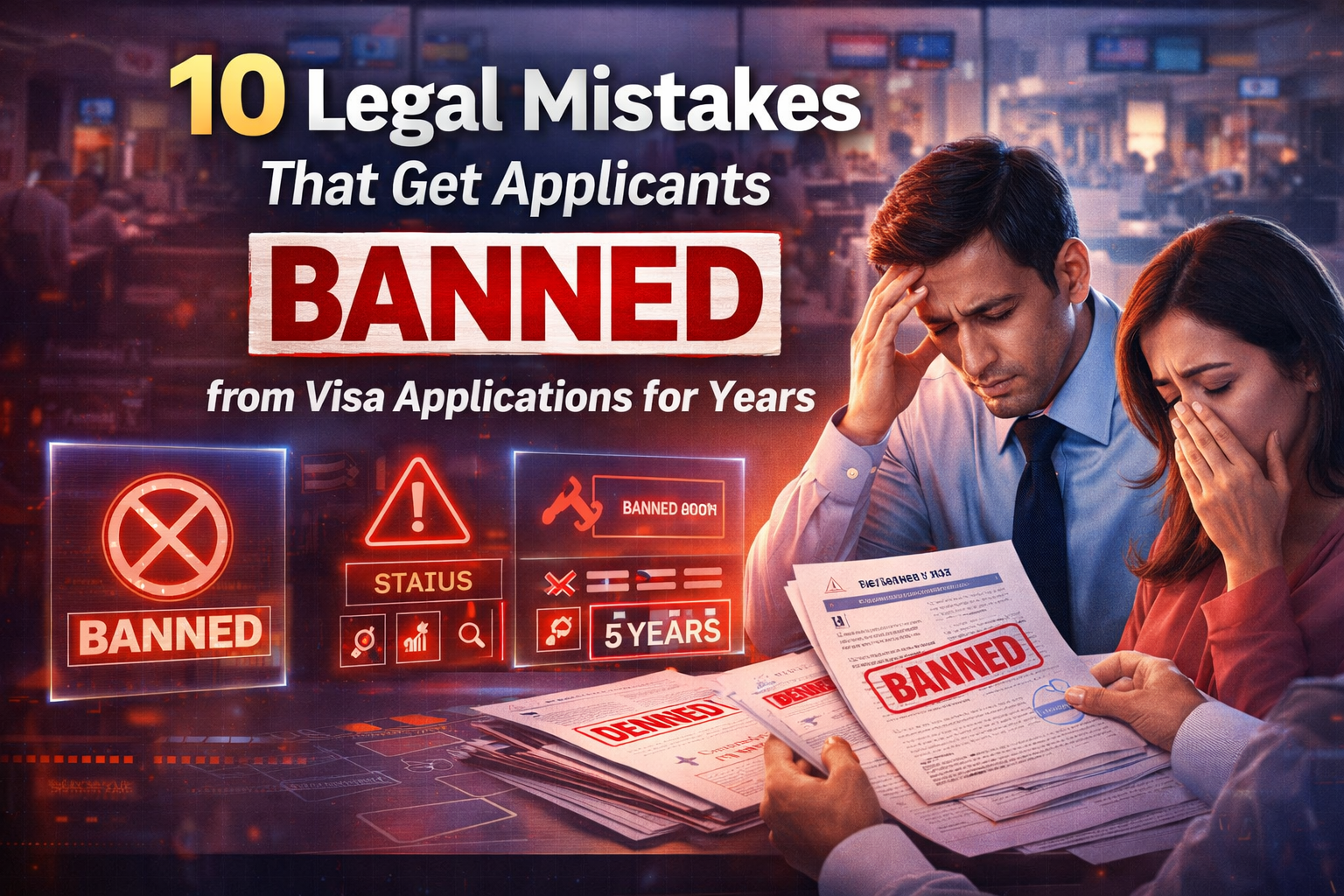
10 Legal Mistakes That Get Applicants Banned from Visa Applications for Years
Visa bans don’t happen by accident. People assume a rejection is just “bad luck” or “weak documentation,” but long-term bans — 1 year, 3 years, 5 years, even lifetime bans — are almost always the result of specific legal mistakes applicants make without realizing the consequences.
Immigration systems worldwide now use automated screening, cross-country data sharing, and risk algorithms that detect inconsistencies faster than ever. That means small mistakes are no longer forgiven — they become grounds for disqualification, future rejections, and multi-year bans.
This guide exposes the 10 most damaging legal mistakes that lead to visa bans, the ones embassies never bother explaining in detail. If you want to avoid long-term immigration trouble, understand these rules before submitting your next visa application.
Why Visa Bans Are Increasing in 2026
Governments are tightening immigration because:
- Fraud levels are increasing
- Security screening is stricter
- Employers and agencies misuse visas
- Global mobility is rising faster than regulation
- Overstays and illegal work cases are climbing
- Countries are tightening labor markets
Your application is judged by far stricter standards than applicants faced even two years ago.
Legal Mistake 1: Submitting Inconsistent Information Across Applications
Visa systems track your history across:
- Past visa applications
- Travel records
- Employer filings
- Immigration databases
- Entry/exit logs
If your details change suspiciously, you are flagged automatically.
Common inconsistencies:
- Different job titles across visas
- Different income levels
- Different education claims
- Different marital status
- Different addresses
- Contradicting information between agency forms and embassy forms
Even one mismatch triggers suspicion of fraud, which can lead to:
- Automatic denial
- Multi-year ban
- Permanent red-flag status
Consistency is not optional — it’s a legal requirement.
Legal Mistake 2: Fake or “Edited” Documents
This is where most long-term bans originate.
Embassies reject immediately if they detect:
- Fake bank statements
- Altered salary slips
- Fabricated job letters
- Modified tax returns
- Forged degrees
- Edited experience certificates
Even minor edits — changing a date, adjusting a salary figure, updating formatting — are legally treated as fraud.
Penalties include:
- 5-year bans
- Lifetime bans
- Criminal charges (depending on the country)
- Employer blacklisting
- Deportation (if applying from abroad)
Visa fraud is taken more seriously than most applicants realize.
Legal Mistake 3: Lying About Previous Visa Refusals
Many applicants assume they can hide a refusal. This is dangerous and naïve.
Immigration systems share data with:
- Previous embassies
- Host countries
- AIRS and INTERPOL databases
- Regional immigration networks
- Biometric systems
If you tick “NO” but the system sees a previous refusal, you’ve committed misrepresentation, which is far worse than a simple rejection.
This often results in:
- 2–10 year bans
- Permanent inadmissibility in some countries
Always declare past refusals. Lying is what destroys your profile.
Legal Mistake 4: Overstaying a Previous Visa
Overstays — no matter how small — leave permanent marks.
Even a few days can trigger:
- Future visa denials
- Travel restrictions
- Automatic bans depending on the country
Long overstays often result in:
- 1–3 year bans
- Deportation records
- Airport flagging on future entry attempts
Governments view overstays as a sign of future immigration risk.
Legal Mistake 5: Working Illegally on a Tourist Visa
This is one of the quickest ways to get banned.
Illegal work includes:
- Freelancing on a tourist visa
- Doing online jobs while in-country
- Attending paid training
- Working for a company before visa issuance
- Trial shifts at restaurants or companies
Immigration sees this as:
- Tax evasion
- Labor law violation
- Immigrant intent
Penalties vary, but many countries impose:
- Immediate deportation
- Blacklisting
- 5–10 year bans
Some Gulf countries impose lifetime bans.
Legal Mistake 6: Submitting Weak or Suspicious Financial Proof
Financial documents are scrutinized heavily.
Risk flags include:
- Sudden large deposits
- Unexplained transactions
- Inconsistent salary patterns
- Bank accounts opened recently
- Borrowed money used to show balance
- Statements that do not show real financial activity
Embassies reject these cases expecting:
- Fake documentation
- Intent to overstay
- Financial instability
A bad financial profile can damage your immigration chances for years.
Legal Mistake 7: Using Blacklisted or Unlicensed Recruitment Agencies
Many applicants do not know that their recruitment agent is:
- Unlicensed
- On a government watchlist
- Previously involved in visa fraud
- Known for processing fake documents
If a blacklisted agency submits your file, you get banned automatically — even if you did nothing wrong.
Using agencies without checking their license status is one of the biggest causes of long-term Gulf visa bans.
Legal Mistake 8: Not Disclosing Criminal Charges or Legal History
Even if court cases were minor, closed, or dismissed, failing to declare them is grounds for:
- Visa cancellation
- Refusal
- Multi-year bans
Immigration authorities consider nondisclosure more serious than the actual offence.
Governments now share:
- Biometric data
- Identity history
- Criminal records
- International match reports
You cannot hide a legal incident. Trying to hide it triggers bans.
Legal Mistake 9: Submitting Incorrect Employer or Sponsor Information
This mistake usually happens when:
- Agents fill forms carelessly
- Applicants guess information
- Employers misreport data
- Job roles change last minute
Red flags include:
- Wrong employer name
- Wrong job title
- Wrong company address
- Job offer letter mismatch
- Incorrect sponsorship details
These inconsistencies can lead to:
- Application rejection
- Employer blacklisting
- Applicant visa bans
This is especially common in Gulf work visa applications.
Legal Mistake 10: Abandoning a Job or Violating Sponsorship Rules
Gulf countries, especially Saudi Arabia, UAE, Qatar, and Kuwait, enforce strict sponsorship systems.
Violations that trigger bans include:
- Absconding
- Leaving employer without notice
- Changing jobs illegally
- Working outside sponsorship
- Violating residency laws
Once an absconding report is filed, your immigration record is damaged for years.
This leads to:
- Travel ban
- Blacklist status
- Immediate visa rejection from all Gulf countries
Even if the employer is wrong, failing to challenge the case legally results in a ban.
The Hidden Mistake: Not Following Embassy Legal Instructions Properly
Embassies reject and ban applicants for simple procedural failures:
- Missing signatures
- Incorrect photo specifications
- Wrong visa category
- Submitting outdated forms
- Using unverified translations
- Ignoring document format rules
A careless error can be interpreted as misrepresentation — leading to bans.
How to Avoid Visa Bans in 2026
Smart applicants protect themselves with strategy, not luck.
- Tell the truth consistently — Even uncomfortable truth is better than bans for misrepresentation.
- Never edit bank documents — Banks know. Embassies know. Systems detect it.
- Keep copies of everything — Old visas, forms, employment letters — everything matters.
- Use only licensed agents — Always check government registration.
- Keep residency history clean — Overstays damage your record permanently.
- Avoid risky travel patterns — Patterns resembling illegal work raise red flags.
- Fix financial issues before applying — Embassies can sense desperation through financial documents.
- Follow legal guidelines exactly — Embassy instructions are not suggestions — they are requirements.
Final Thoughts
Visa bans don’t happen because someone at the embassy “didn’t like your application.” They happen because immigration systems detect legal mistakes, inconsistencies, or risk factors that applicants overlook.
Whether it’s fraud, wrong documents, illegal work, or sponsorship violations, every mistake has a legal consequence — often severe, often long-term.
In 2026, the only way to avoid bans is to understand the rules better than the system expects. The more you know, the fewer immigration disasters you face.