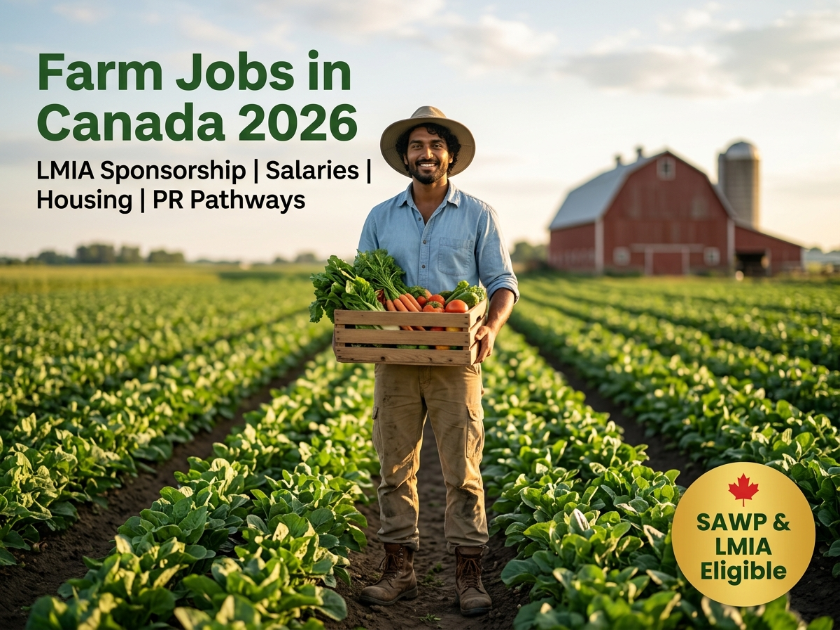
Canada’s Farms Are Hiring Foreign Workers — Right Now
Canada’s agricultural sector is one of the largest and most labor-dependent industries in the country, and in 2026, the worker shortage has never been more acute. From fruit orchards in British Columbia to dairy farms in Ontario and grain operations in Saskatchewan — Canadian farms cannot operate without foreign labor.
For foreign workers, this creates a rare combination: accessible entry requirements, employer-provided housing, LMIA sponsorship, and direct PR pathways — all in one sector.
Key Fact: General farm workers fall under NOC 85100 — a category eligible for the Agri-Food Pilot, Provincial Nominee Programs, SAWP, and Canadian Experience Class immigration streams.
Farm Worker Salaries in Canada by Province (2026)
| Province | Hourly Wage | Monthly Earnings |
|---|---|---|
| Ontario | $17–$23/hr | $2,800–$3,900 |
| British Columbia | $17–$24/hr | $2,800–$4,100 |
| Alberta | $18–$25/hr | $3,000–$4,200 |
| Saskatchewan | $17–$23/hr | $2,800–$3,800 |
| Manitoba | $17–$22/hr | $2,800–$3,700 |
| Quebec | $17–$23/hr | $2,800–$3,900 |
| Atlantic Canada | $16–$21/hr | $2,600–$3,500 |
Salary boosters:
- 🚜 Farm equipment operators and livestock specialists earn $26–$32/hr
- ⏰ Overtime widely available during harvest seasons
- 🌙 Night shift premiums on dairy and poultry farms
- 🏠 Subsidized housing reduces living costs by $800–$1,500/month
- 📦 Piece-rate bonuses on fruit and vegetable picking
Housing & Accommodation — A Major Financial Advantage
One of the biggest benefits of Canadian farm work that most guides overlook: most farms provide housing directly.
| Housing Type | Cost to Worker |
|---|---|
| On-site bunkhouse (shared) | Free – $150/month |
| Farm housing unit | $100–$400/month |
| Utilities included | Yes — most farms |
| Transport to worksite | Provided by employer |
For foreign workers, subsidized housing means savings of $800–$1,500/month compared to renting privately — making farm work financially stronger than many urban jobs at similar hourly rates.
Most In-Demand Farm Jobs in Canada (2026)
General Farm Worker (NOC 85100) — Planting, harvesting, crop sorting, irrigation, barn cleaning. No experience required. Most LMIA-accessible role in Canada’s agricultural sector.
Fruit & Vegetable Picker — High seasonal recruitment in Ontario, BC, Nova Scotia, and Quebec. Hand-picking, sorting, packing. Entry-level with immediate start dates.
Greenhouse Worker — Plant care, watering, pest control, climate monitoring. Year-round stability makes this one of the most sought-after farm roles for foreign workers.
Dairy Farm Worker — Feeding livestock, milking operations, barn cleaning, machinery use. Often leads to long-term renewable contracts and strong PR pathways.
Poultry Farm Worker — Feeding, egg collection, barn maintenance, animal health monitoring. Consistent, stable work with strong employer retention rates.
Livestock Handler — Managing animals, health monitoring, feed distribution, equipment operation. Some experience recommended for faster hiring.
Farm Equipment Operator — Tractor, combine, sprayer, and seeding machinery operation. Well-paying specialized role — experience required but LMIA approvals are very common.
Two Pathways to Get a Farm Job in Canada
Pathway 1: LMIA-Based Work Permit
The most common route for farm workers from Asia, Africa, and the Middle East.
How it works:
- Apply to Canadian farms actively recruiting foreign workers
- Employer submits LMIA application — approved due to documented labor shortages
- Worker applies for work permit with: LMIA letter, job offer, passport, medical exam, police clearance
- Arrive in Canada and begin work — often within weeks of permit approval
Best provinces for LMIA farm jobs: Ontario, British Columbia, Alberta, Manitoba, Saskatchewan
Pathway 2: Seasonal Agricultural Worker Program (SAWP)
A government-to-government program offering the most structured and protected farm work pathway.
| Feature | Detail |
|---|---|
| Eligible countries | Mexico, Jamaica, Trinidad & Tobago, Barbados, Guatemala |
| Duration | Up to 8 months per season |
| Housing | Employer-provided and subsidized |
| Transport | Return flights covered |
| Renewability | Annual renewals common |
| Worker protections | Strongest of any agricultural program |
SAWP workers benefit from guaranteed employer placement, subsidized housing, covered transportation, and strong legal protections — making it the safest farm work pathway available.
Top Provinces for Farm Jobs in Canada
| Province | Key Agricultural Sectors |
|---|---|
| Ontario | Greenhouse crops, fruit picking, dairy, poultry |
| British Columbia | Strawberries, blueberries, apples, grapes, wine grapes |
| Alberta | Cattle, dairy, grain farms, equipment operators |
| Saskatchewan | Large-scale crop farms, machinery operators |
| Manitoba | Greenhouses, hog farms, vegetable production |
| Quebec | Fruit picking, dairy — basic French an asset |
| Atlantic Canada | Seasonal harvesting, AIP-eligible employers |
Basic Requirements for Farm Jobs in Canada
- ✅ Physical fitness — lifting 25–50 lbs, outdoor work, long hours on feet
- ✅ Weather tolerance — heat, cold, rain, and snow depending on season and province
- ✅ No formal education required — entry-level roles accept all backgrounds
- ✅ No experience required — for general labor, picking, and greenhouse roles
- ✅ Clean criminal record — mandatory for all work permit applications
- ✅ Valid work authorization — LMIA permit, SAWP permit, or open work permit
⚠️ Visitor visas do not permit farm work in Canada. Working on a tourist visa is illegal and results in deportation.
PR Pathways for Farm Workers in Canada
Farm work experience opens multiple direct routes to Canadian permanent residency:
Agri-Food Pilot Program — Specifically designed for farm and food processing workers. One of Canada’s most direct PR pathways for agricultural employees. Eligible NOC categories include general farm workers, dairy workers, and greenhouse operators.
Provincial Nominee Programs (PNP) — Manitoba, Saskatchewan, Nova Scotia, and New Brunswick actively nominate agricultural workers facing critical shortages. A provincial nomination adds 600 CRS points — near-guaranteeing a PR invitation.
Atlantic Immigration Program (AIP) — Farm employers in Atlantic Canada can directly sponsor workers for permanent residency after 6–12 months of employment.
Rural & Northern Immigration Pilot (RNIP) — Small rural farming communities sponsor agricultural workers for PR in exchange for settlement commitments.
Canadian Experience Class (Express Entry) — After 12 months of eligible Canadian work experience, farm workers in qualifying NOC categories can apply directly for PR through Express Entry.
Skills That Maximize Your Hiring Chances
- 🌾 Prior agricultural or farming experience
- 🚜 Tractor or farm equipment operation skills
- 🐄 Animal handling — dairy, poultry, or livestock experience
- 🗣️ Basic English communication
- 💪 Physical fitness and endurance
- ⏱️ Reliability, discipline, and punctuality
Even complete beginners are regularly hired for general farm worker and fruit picking roles — experience is a bonus, not a requirement.
Honest Challenges of Farm Work in Canada
| Challenge | Reality |
|---|---|
| Physical intensity | Outdoor labor, heavy lifting, long shifts daily |
| Weather exposure | Working in heat, rain, and cold depending on season |
| Rural isolation | Many farms are far from cities and amenities |
| Seasonal cycles | Some roles end after harvest — planning required |
| Repetitive tasks | Same physical movements daily |
| Strict schedules | Early mornings and tight production timelines |
Understanding these realities before applying ensures better preparation, longer job retention, and stronger PR application records.
Frequently Asked Questions
Q: Can I get a farm job in Canada with no experience? A: Yes — general farm worker, fruit picker, and greenhouse worker roles regularly hire beginners with zero agricultural background. On-site training is provided.
Q: Do Canadian farms really provide free housing? A: Most farms offer subsidized or free on-site housing. Costs range from $0–$400/month with utilities typically included — a significant financial advantage over urban employment.
Q: Which province has the best farm jobs for foreign workers? A: Ontario and British Columbia have the highest volume of postings. Alberta offers the highest wages. Atlantic Canada offers the most accessible PR sponsorship through AIP.
Q: Can farm work lead to Canadian permanent residency? A: Yes — through the Agri-Food Pilot, PNP, AIP, RNIP, or Canadian Experience Class after qualifying work experience.
Q: Is SAWP better than an LMIA work permit for farm work? A: SAWP offers stronger worker protections, covered housing and transport, and easier renewals — but is only available to workers from specific countries. LMIA permits are available to a wider range of nationalities.
Final Verdict: Are Farm Jobs the Right Canada Pathway for You?
| Your Profile | Recommendation |
|---|---|
| No degree or formal education | ✅ Fully accessible — no qualifications needed |
| From Mexico, Jamaica, or Caribbean | ✅ SAWP is your best and most protected route |
| Seeking LMIA sponsorship | ✅ Among the highest approval rates in Canada |
| Need affordable housing | ✅ Most farms provide subsidized accommodation |
| Targeting Canadian PR | ✅ Agri-Food Pilot and PNP directly available |
| Willing to work outdoors seasonally | ✅ Strong financial returns with low living costs |
Bottom line: Canadian farm jobs in 2026 offer foreign workers something rare — accessible entry, employer-provided housing, strong LMIA approval rates, and direct PR pathways all in one sector. For physically prepared, disciplined workers willing to commit to agricultural life, farming in Canada remains one of the most financially rewarding and immigration-friendly pathways available anywhere in the world.
Disclaimer: Immigration pathways, SAWP eligibility, and LMIA conditions change frequently. Always verify current requirements with IRCC (ircc.canada.ca) and your country’s designated SAWP authority before applying.