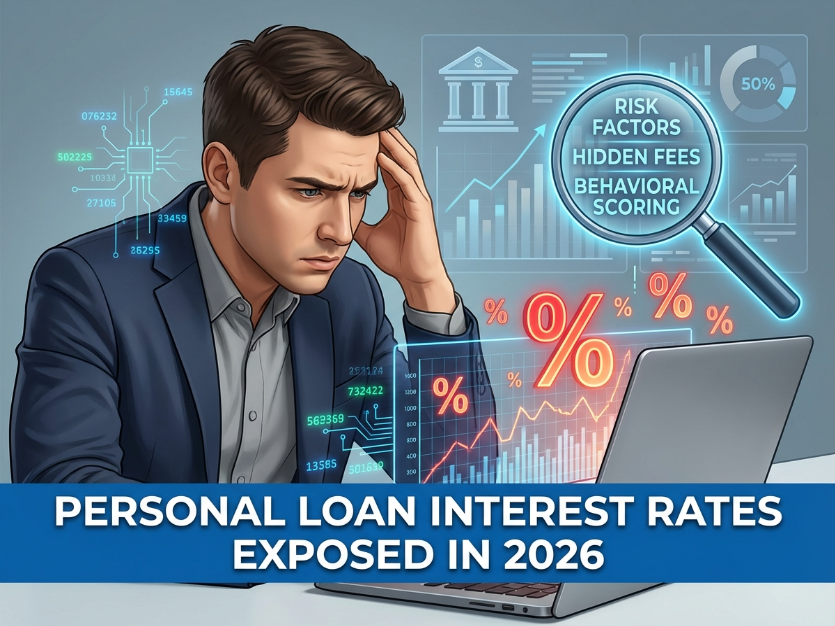
The Truth About Personal Loan Interest Rates: What Banks Really Look At Before Approving You in 2026
Personal loans are still marketed as fast, flexible, and convenient. Banks and lenders promise “instant approval,” “low interest,” and “guaranteed offers.”
But the reality for 2026 borrowers is far more complex: the interest rate you actually receive is rarely what’s advertised, and approval decisions now rely on deeper, more data-driven analysis than ever before.
This guide reveals what lenders really consider, the hidden risk factors that increase your interest rate, and why many borrowers end up paying more than they expect.
1. Why Personal Loan Rates Are Rising in 2026
Even though global lending trends seem stable, banks are raising interest rates due to three key reasons:
1. Rising Borrower Risk
- Job instability and shorter employment cycles
- Higher living costs and inflation pressures
- Credit card and loan debt
- Weak emergency savings
2. Smarter, Stricter Credit Models
Banks increasingly rely on AI-driven risk scoring, behavioral analytics, income stability predictions, and spending pattern monitoring. Traditional credit scores alone no longer determine rates.
3. Operational and Regulatory Costs
- Tighter liquidity requirements
- Higher compliance and regulatory costs
- Slower economic growth
These costs are passed directly to borrowers in the form of higher interest rates.
2. Advertised vs. Real Interest Rates
Banks in 2026 still advertise “starting from” rates that apply only to top-tier borrowers. Most applicants will pay significantly higher rates due to risk-based pricing.
Advertised Rate:
- Only for excellent credit holders
- Requires low debt, high income, and stable employment
Real Rate Most Borrowers Pay:
- 4–12% higher than advertised
- Includes risk-based adjustments, hidden fees, loan processing charges, and insurance add-ons
A “starting at 6%” rate often ends up being 12–18% for typical borrowers.
3. What Banks Really Check Before Approving You
A. Debt-to-Income Ratio (DTI)
- Under 30% → best rates
- 30–40% → acceptable
- 40–50% → high risk
- Above 50% → likely rejection
B. Income Stability
Lenders assess consistency over the last 12–24 months, including employer stability, industry, and probation periods.
C. Spending Behavior
- Frequent luxury or impulse purchases
- Gambling or high-risk transactions
- Overdrafts or end-of-month low balances
D. Credit Utilization
- Above 30% → caution
- Above 50% → higher interest
- Above 75% → almost guaranteed higher rates
E. Internal Bank Score
Banks have proprietary scoring systems based on account activity, transaction patterns, and financial behavior that can override your credit score.
4. Hidden Factors That Raise Your Loan Rate
- Low account balances
- Multiple loan applications
- Past loan rescheduling
- Declining optional insurance
- High-risk employment sectors
- Frequent job changes
Even small behavioral markers can increase the effective interest rate.
5. Risk-Based Pricing Explained
Two borrowers with identical income may receive drastically different rates based on their personal risk profile.
Example (2026 scenario):
- Applicant A: Low DTI, consistent income, clean bank record → 7% interest
- Applicant B: High DTI, recent job change, high credit card usage → 15% interest
The same loan product, different rates.
6. Hidden Fees in 2026
- Loan Processing Fees: 2–4% upfront
- Late Payment Penalties: Very high, reported to credit bureaus immediately
- Early Settlement Fees: Some banks penalize early repayment
- Insurance Add-Ons: Payment protection or credit life insurance may be auto-added
- Restructuring Fees: Additional charges if rescheduling becomes necessary
7. Why More Borrowers Are Getting Rejected
Common triggers for rejection in 2026:
- DTI above 50%
- Unstable or low income
- High-risk job sectors
- High credit utilization
- Recent missed payments or multiple applications
- Poor internal bank score
8. How to Improve Your Loan Approval Odds
- Reduce credit card utilization below 30%
- Pay off small loans to lower DTI
- Limit loan applications to avoid risk flags
- Show 3–6 months of stable income
- Maintain a higher average account balance
- Pay bills on time consistently
9. How to Get a Lower Personal Loan Rate in 2026
- Apply through your primary bank to leverage your internal score
- Opt for a salary-transfer loan if possible
- Maintain a healthy credit mix
- Request a rate revision after 6–12 months of perfect repayment
- Consolidate high-interest debts
- Reject unnecessary insurance add-ons
10. Fintech Lenders in 2026 — Better or Worse?
- Pros: Fast approvals, minimal paperwork
- Cons: Higher interest rates, shorter repayment terms, aggressive fees, limited flexibility
For most borrowers, traditional banks remain the best source for lower rates—if you meet their criteria.
11. The Psychological Trap
Borrowers often apply emotionally due to urgent expenses, medical bills, lifestyle pressure, or “limited-time offers.” Banks rely on this impulse behavior.
12. Bottom Line: Personal Loans Are a Business
Banks profit when:
- You borrow
- You take longer to repay
- You incur fees or restructure
- You pay high interest
Understanding your risk profile, DTI, internal bank score, credit utilization, and income stability is essential to securing the best rates.
In 2026, personal loans are not about what you want—they’re about what the bank sees in you. Navigate strategically to save money and avoid overpaying.